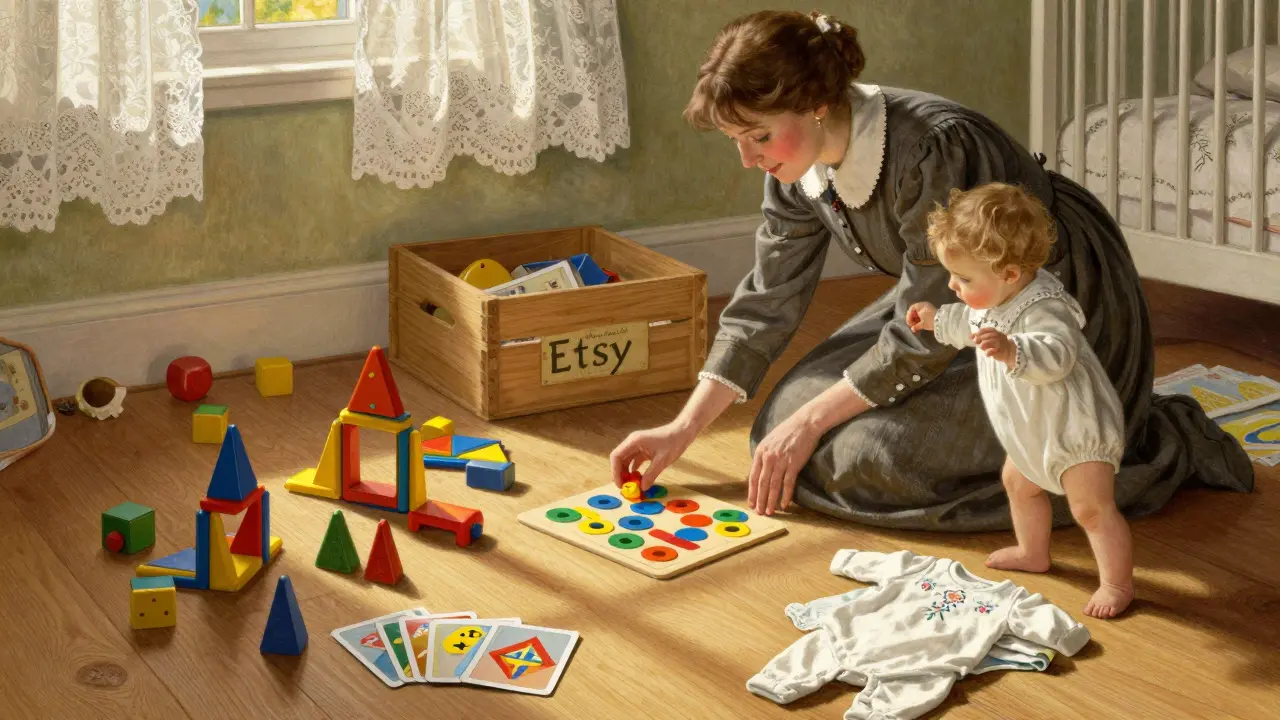
Every parent knows the pile: stuffed animals with one eye missing, outgrown onesies, broken puzzles, and toy cars that haven’t been touched since last Christmas. What most don’t realize is that this clutter isn’t just junk-it’s cash waiting to be unlocked. The global market for secondhand children’s items hit $28.6 billion in 2025, and it’s growing faster than new kids’ products. Parents aren’t just clearing space-they’re turning their kids’ outgrown stuff into real income.
What Sells Best? The Top Categories and Why
Not all kids’ items sell equally. Some items move quickly with high margins; others sit for months with little interest. The winners? Educational toys, sustainable clothing, and baby essentials.Magnetic blocks and STEM-focused learning kits dominate online sales. One analysis found magnetic blocks selling nearly 6,000 times a month at an average price of $26.81, with buyers giving them 4.6 out of 5 stars. Bilingual flash cards aren’t far behind, pulling in over 2,700 monthly sales. These aren’t just toys-they’re tools parents are willing to pay for, especially if they’re still in good condition and come with all the pieces.
Children’s clothing is the biggest category by volume. But not just any clothes. Gender-neutral styles, premium brands like Patagonia Baby and Hanna Andersson, and dress-up costumes sell fastest. Patagonia Baby items retain up to 82% of their original retail value. Hanna Andersson dresses hold 78%. Why? Because these brands are durable, timeless, and trusted. Buyers know they’re getting quality that lasts beyond one season.
Baby gear has some of the highest profit margins. Swaddle blankets, sleep sacks, and personalized blankets often net 30-55% profit after costs. Even small items like baby knee pads and stroller fans, which cost under $10 to buy new, can sell for $15-$20 with minimal shipping. They’re lightweight, easy to pack, and parents buy them in bulk for gifts.
Where to Sell: Platform Breakdown
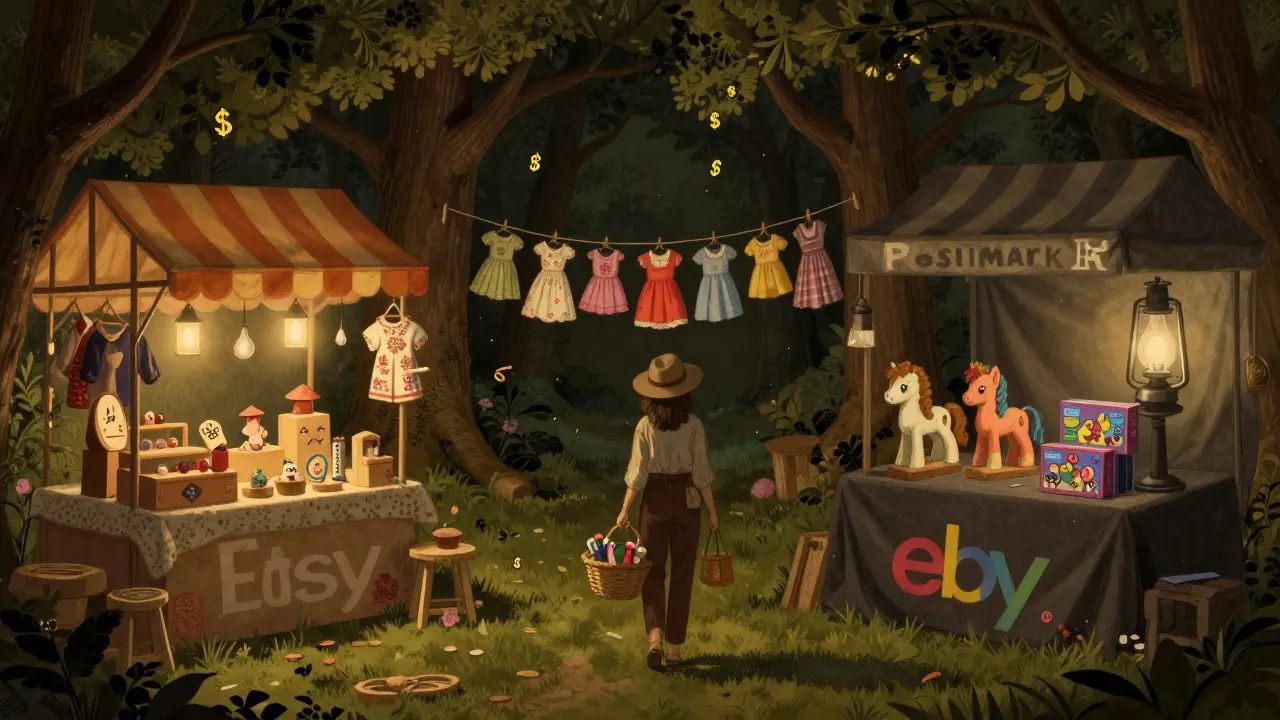
Choosing the right platform makes a huge difference in price, speed, and effort.Etsy is the go-to for handmade, boutique, or unique items. Sellers there get 32% higher prices than on general marketplaces. If you have a collection of Montessori toys or organic cotton onesies with custom embroidery, Etsy is your best bet.
Poshmark dominates for gently used clothing. It handles $4.2 billion in children’s resale annually. Sellers get 23-37% of the original retail price-far better than Amazon’s 14-22%. The platform’s community feel and easy photo uploads make it ideal for fashion-focused items.
Facebook Marketplace works best for bundles. A complete baby shower gift set sells 37% faster than selling each item alone. It’s also great for larger items like high chairs or strollers, where local pickup cuts shipping costs.
eBay is where collectors thrive. Discontinued LEGO sets, vintage My Little Ponies, and rare action figures can earn 45-65% profit. But be warned: dispute rates are 19% higher than average. Accurate descriptions and photos are non-negotiable.
Amazon is strongest for new-in-box educational toys. If your magnetic blocks are still sealed, you can keep 92% of the original price through Amazon’s FBA program. But for used items? You’ll get less than half of what you’d make on Poshmark.
Condition Matters More Than You Think
One of the biggest reasons listings fail? Poor condition descriptions. Buyers are cautious. They’ve been burned before-by stained clothes, missing parts, or unsafe toys.Top sellers use a clear 5-point scale: New, Like New, Excellent, Good, and Fair. They don’t just say “used.” They show close-up photos of frayed seams, faded colors, or missing buttons. Buyers are willing to pay 31% more for listings with honest, detailed condition notes.
Also, never skip safety checks. High chairs, cribs, and car seats have strict federal standards. As of January 2026, Poshmark requires all furniture listings to meet CPSC (Consumer Product Safety Commission) guidelines. If your item doesn’t have a compliance label or was recalled, don’t list it. Even if it looks fine, the risk isn’t worth it.
How to Write Listings That Convert
A great photo won’t save a weak description. Buyers scroll fast. You need to grab attention in seconds.Start with keywords. Use phrases like “Montessori-approved,” “STEM learning,” or “organic cotton.” Research shows items with these descriptors sell 22 days faster and for 18% more. Don’t just say “blue dress.” Say “Hanna Andersson organic cotton girls’ dress, size 2T, gently used, no stains, perfect for spring.”
Include sizing details. Children’s sizes vary by brand. A size 4T from one brand might fit like a 5T from another. Always list measurements: chest, length, sleeve. Include a note like “fits true to size” or “runs small.”
And here’s the quiet secret: most sellers spend 10-15 minutes writing each listing. That adds up. If you’re listing 20 items a week, that’s 3-4 hours of writing time. A simple product description generator can cut that to under a minute per item-no copywriting skills needed.
Seasonal Timing Is Everything
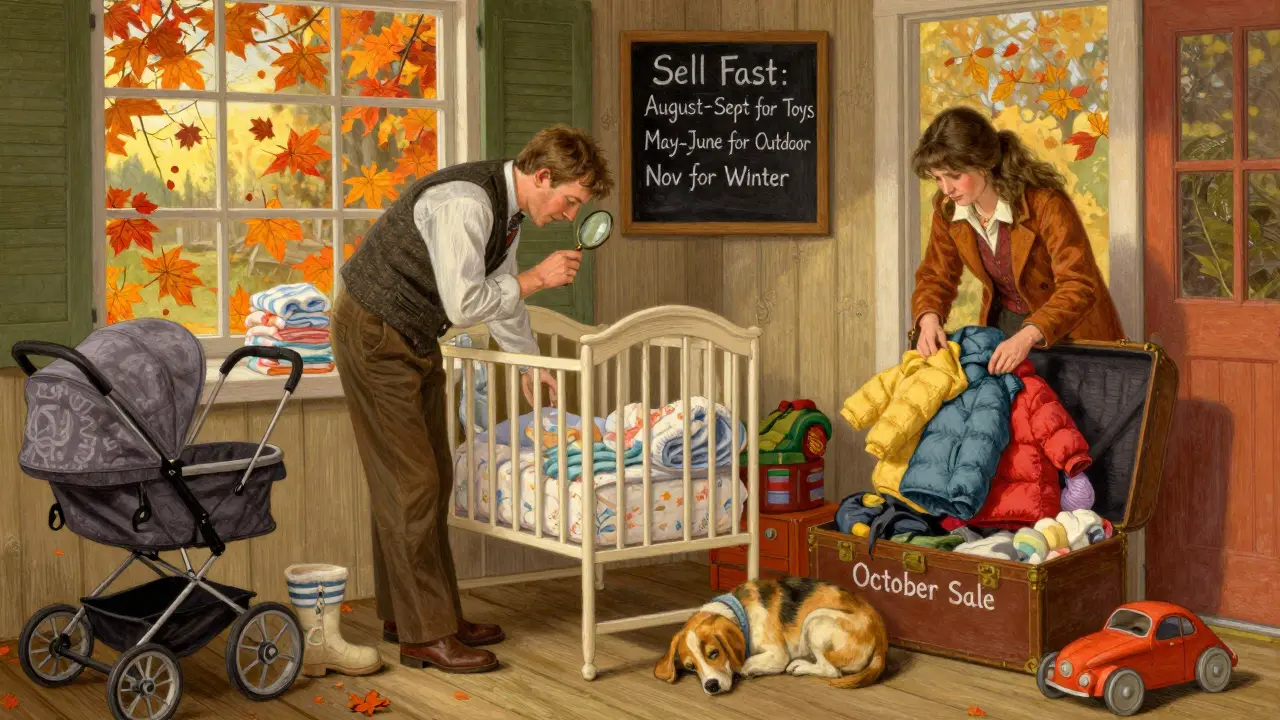
Sell at the wrong time, and your item might sit for months. Sell at the right time, and it’s gone in days.August-September is peak season for educational toys. Parents are prepping for back-to-school. Magnetic blocks, alphabet puzzles, and science kits spike 38% in sales. List them in late July for the best results.
May-June is when outdoor toys fly off the shelves. Tree swing seats, water tables, and ride-on toys see 42% more sales. List them by mid-May to catch early summer shoppers.
November is the best time to sell winter gear-coats, snow boots, insulated bibs. Parents are already thinking ahead. List by early October to get ahead of the rush.
What Not to Sell (And Why)
Some items seem like easy cash-but they’re traps.Broken toys with missing parts get lowball offers or no interest at all. Buyers don’t want to fix things. If a puzzle’s missing three pieces, don’t list it.
Used high chairs and cribs are risky. Safety standards change every few years. Even if yours looks fine, if it doesn’t have a current compliance sticker, buyers will walk away. The same goes for car seats-most won’t touch them unless they’re brand new and sealed.
Stained or smelly items are instant rejects. Milk spills, diaper leaks, and mildew don’t wash out completely. Buyers smell it in photos. Don’t risk a bad review.
Shipping, Storage, and Scaling
Profit isn’t just about price-it’s about cost. Shipping eats into margins fast.Items under 8x8x8 inches fit perfectly in USPS flat-rate boxes. That’s a huge advantage. Small toys, books, and clothing cost under $5 to ship. Larger items like strollers or play tents? Local pickup is your friend.
Top sellers track their inventory using tools like Sellbrite. They monitor sell-through rates (aim for 65% within 45 days), pricing elasticity, and seasonal trends. If something hasn’t sold in 30 days, drop the price by 10-15%. Don’t wait until it’s been sitting for months.
Start small. Pick one category-say, baby clothes-and list 10 items. Learn how photos, descriptions, and pricing affect sales. Then scale. Many professional sellers focus on just 2-3 niches: Montessori toys, sustainable clothing, or premium baby gear. Specialization builds trust and repeat buyers.
The Bigger Picture: Why This Market Is Growing
This isn’t just a side hustle trend. It’s a structural shift.Childcare costs have jumped 34% since 2020. Parents are looking for ways to stretch every dollar. At the same time, 63% of millennial parents say sustainability matters. They don’t want to buy new if they can buy used-and they’re happy to sell what their kids outgrow.
Platforms are responding. Amazon launched “Kids Certified Renewed,” offering warranties on refurbished toys. Poshmark now verifies safety compliance. Blockchain tools like Provenance help prove eco-friendly materials are real. Regulation is tightening, too. California’s new law requires lead testing for all children’s items under 12.
The market is projected to hit $41.2 billion by 2028. The winners? Sellers who treat this like a real business: consistent, honest, and strategic. Not those who just toss a few things online and hope for the best.




Comments
Sabrina de Freitas Rosa
January 27, 2026OMG I sold my kid’s entire Montessori toy collection last month and made $800. Like, I didn’t even clean the magnetic blocks properly and they still sold for $30 each. People are WILD for this stuff. I thought I was just decluttering, turned out I’m a tiny toy tycoon. 🤑
Erika French Jade Ross
January 28, 2026so i listed 3 hanna andersson dresses last week and sold em in 12 hours 😭 i didnt even take good pics lol. the internet is wild. also, why do people still list broken toys? like… just throw em away. or compost em. 🌱
Geoffrey Trent
January 29, 2026Everyone’s acting like this is genius advice but it’s just common sense. If you can’t tell that baby gear has safety labels, you shouldn’t be selling anything. Also, Amazon FBA for new toys? That’s been true for 5 years. Stop pretending you discovered something. And why is everyone ignoring shipping costs? I lost $40 last month on a $60 stroller because I forgot to calculate return labels. 🙄
John Weninger
January 30, 2026Hey, I just wanted to say how cool it is that so many parents are turning clutter into cash while also being eco-conscious. I started selling my daughter’s outgrown clothes last winter and it actually helped me feel less guilty about all the stuff we accumulate. The best part? I met another mom on Facebook Marketplace who traded me a like-new baby swing for three organic onesies. No money exchanged. Just kindness and clean laundry. 🤗
Royce Demolition
January 31, 2026YESSSSS this is the vibe 🙌 I sold 17 stuffed animals last week and made $210. One had a missing eye. I called it ‘unique character design’ and it sold for $18. 🐻💥 People love a story. Also, use Canva for your pics. It’s free. And don’t forget to say ‘no smoke/pets’ - it’s magic. 🚫🐶🚬
Write a comment