
PEG Ratio Calculator
Calculate Your Stock's PEG Ratio
Peter Lynch's PEG ratio helps determine if a stock is undervalued relative to its growth. A PEG below 1.0 typically indicates undervaluation.
Results
Your calculated PEG ratio:
Most people think stock picking is for Wall Street pros with Bloomberg terminals and PhDs in finance. But Peter Lynch, the legendary manager of Fidelity Magellan Fund, proved something different: the best stock ideas are often right outside your door. During his 13-year run from 1977 to 1990, Lynch turned $100 million into over $14 billion, averaging 29.2% annual returns-more than double the S&P 500. And he didn’t do it by reading complex financial reports first. He did it by noticing what people were buying, where they were lining up, and what businesses kept growing around him.
Why Your Grocery Store Knows More Than Wall Street
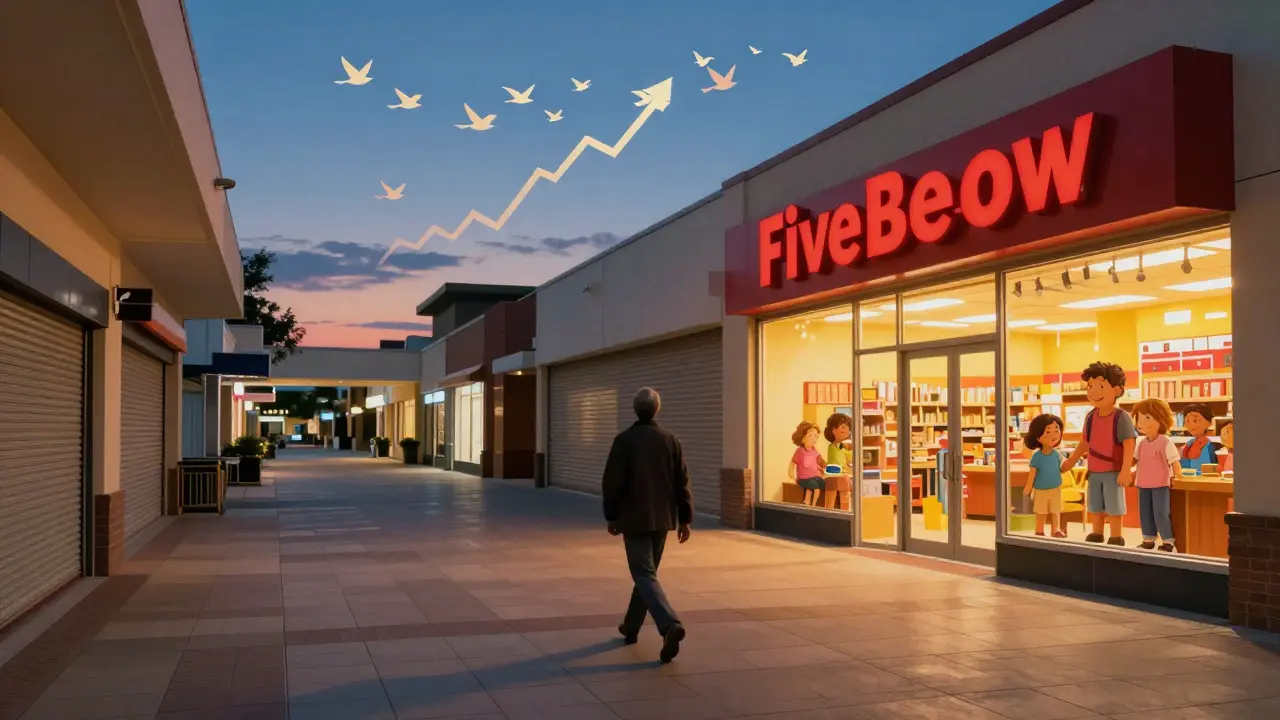
Lynch didn’t need insider tips or fancy models. He believed everyday people had a real edge: access to real-time consumer behavior. While hedge funds were analyzing spreadsheets, Lynch was watching parents buy L’eggs pantyhose at the supermarket, teenagers line up at Taco Bell after school, and families visit Five Below on weekends. He noticed patterns before analysts did. That’s how he found Taco Bell-years before PepsiCo bought it-and turned it into a 10x winner. He didn’t need a conference call. He just needed to be present.This isn’t luck. It’s observation. When you see a local restaurant with a line out the door every Friday night, or a discount store that’s always full of families, you’re seeing demand before it shows up in earnings reports. Most investors wait for the news to break. Lynch acted on what he saw first. And he wasn’t alone. In 2022, a Reddit user noticed crowds at Five Below and invested $5,000. By 2021, that stake was worth $185,000. That’s not a fluke-it’s Lynch’s method in action.
The Six Types of Stocks Lynch Actually Bought
Lynch didn’t just buy anything that looked popular. He had a system. He categorized stocks into six types, each with different rules:- Fast-Growers: Small companies growing earnings 20-25% a year. These were his favorites. He looked for them in retail, restaurants, and consumer goods.
- Stalwarts: Big, reliable companies like Coca-Cola or Procter & Gamble. They grew slower-10-12% a year-but paid dividends and rarely crashed.
- Slow-Growers: Mature businesses like utilities or railroads. Low growth, low risk. He’d only buy them if they were deeply undervalued.
- Cyclicals: Companies tied to the economy-think Ford or Home Depot. He bought them when everyone was scared, like during the 1982 recession.
- Turnarounds: Companies on the brink, like Chrysler in the early 80s. He dug into their balance sheets to see if they had a real chance to recover.
- Asset Plays: Companies whose real worth was hidden-like a retailer owning prime real estate nobody noticed. He looked for assets worth more than the stock price.
His sweet spot? Fast-growers. He didn’t chase big names. He chased growth-fast, consistent, and visible.
The PEG Ratio: The Simple Math Behind His Wins
Lynch didn’t care about P/E ratios alone. He invented the PEG ratio-Price/Earnings to Growth-to find stocks that were cheap relative to how fast they were growing. Here’s how it worked: if a company was growing earnings at 25% a year, he’d only buy it if its P/E was below 25. Even better? He wanted it under 20. That meant a PEG under 1.0. A PEG below 1 meant the stock was undervalued for its growth. A PEG above 1 meant it was overpriced.He didn’t need fancy software. He could calculate it by hand. In 1985, he bought Philip Morris (now Altria) at a P/E of 12 while earnings grew at 18%-a PEG of 0.67. Over the next five years, the stock went up 12x. That’s the power of the PEG ratio. Today, analysts still use it. But now they add ROIC (Return on Invested Capital) above 15% to make sure the company isn’t just growing-it’s growing profitably.

How to Start Looking Around Your Neighborhood
You don’t need a finance degree. You just need to pay attention. Here’s how to begin:- Watch what people buy. Keep a notebook. Which local stores are always busy? Which ones are closing? Are people switching from one brand to another?
- Check the competition. If your favorite coffee shop is packed, visit the others nearby. Are they empty? Is the product better? Is the service faster?
- Use free tools. Go to the SEC’s EDGAR database. Look up the company’s annual reports (10-K) and quarterly reports (10-Q). Look for: 5-year revenue growth over 10%, gross margins above industry average, and debt-to-equity under 0.5.
- Calculate the PEG ratio. Find the earnings growth rate from the report. Divide the stock’s P/E by that number. If it’s under 1, it’s worth a deeper look.
- Don’t overinvest. Lynch held 25-30 stocks. He never put more than 5% of his portfolio in one company. That way, one loser wouldn’t wreck his returns.
- Wait. Most of his best stocks took 5 to 10 years to hit their peak. He held through ups and downs. If you’re not ready to wait, this isn’t for you.
- Track it monthly. Read the earnings call. Read the annual report. Don’t just buy and forget.
One investor on Bogleheads.org spent 18 months simulating investments in local restaurants before buying real stock. His accuracy improved by 37%. That’s the power of practice.
Where Lynch’s Method Works-and Where It Fails
Lynch’s approach worked best in industries you can see and touch: restaurants, retail, consumer brands, auto parts, and home goods. He found 78% of his tenbaggers in these areas. He missed Microsoft and Intel because their products weren’t visible in daily life. You couldn’t see a kid using Windows 95 at school and think, “That’s the next big thing.”He also avoided financials and utilities. Why? Because you can’t tell if a bank is doing well just by walking past its branch. You need to dig into loan loss reserves and interest rates. Too complicated for casual observation.
Today, the rules have changed a little. With TikTok and Reddit, trends spread faster. A popular local brand can go viral in weeks. That means your window to act is shorter-down from 18 months to 6-9 months. But the core idea still holds: if you see something people love, and it’s growing, and the numbers make sense, it’s worth looking at.
Why Most People Fail at This Method
Lynch’s approach sounds simple. But most people mess it up. Here’s why:- They buy what they like, not what’s good. A 2022 study found 68% of beginners bought stocks just because they liked the product. That’s not investing. That’s fandom. Lynch bought companies with strong balance sheets, even if he didn’t personally use the product.
- They give up too soon. The average Lynch-style investor holds for 4.7 years. But 31% quit within two years because they didn’t see quick returns. Patience isn’t optional-it’s the whole point.
- They skip the research. Seeing a busy store isn’t enough. You need to check the financials. Otherwise, you’re just gambling.
Warren Buffett said it best: “Peter showed millions of ordinary people they could compete successfully in markets by using their own eyes and minds.” But he didn’t say “just look.” He said “look, then check, then wait.”
What’s Different Today?
Lynch worked in the 80s. Today, you have tools he never dreamed of:- Fidelity’s “Lynch’s Lens” app uses your location and shopping habits to suggest potential stocks.
- Apps like Placer.ai track foot traffic to stores in real time.
- Yahoo Finance and TradingView give you free financial data and charts.
- ESG factors matter now. 61% of modern investors screen for sustainability alongside financials.
But the core hasn’t changed. You still need to walk around. You still need to notice. You still need to ask: “Why are people here? Is this growing? Are they making money?”
The market is more efficient now. But it’s not perfect. There are still hidden gems-local chains expanding, niche brands going viral, family-run businesses going public. They’re out there. You just have to be looking.
Final Thought: You Don’t Need to Be a Pro
You don’t need to be rich. You don’t need to be smart. You just need to be curious. Peter Lynch didn’t have a magic formula. He had a habit: pay attention. He turned his daily life into a research lab. And so can you.Start small. Pick one industry you understand-coffee shops, discount stores, pet supplies. Watch. Take notes. Check the financials. Wait. If you do that for a year, you’ll know more than 90% of the people trading on apps. And that’s the real edge.
Can I really find good stocks just by looking around my neighborhood?
Yes-if you combine observation with basic financial research. Peter Lynch found Taco Bell, Hanes, and Pep Boys by noticing customer behavior. But he didn’t stop there. He checked their balance sheets, earnings growth, and debt levels. Seeing a busy store is just step one. You need to confirm the company is profitable, growing, and undervalued. That’s how you turn a hunch into an investment.
What’s the PEG ratio, and why does it matter?
The PEG ratio = Price-to-Earnings ratio divided by Earnings Growth Rate. Lynch used it to find stocks that were cheap relative to how fast they were growing. A PEG under 1 means the stock is undervalued for its growth. For example, a company growing at 20% a year with a P/E of 16 has a PEG of 0.8. That’s a buy. A company growing at 10% with a P/E of 30 has a PEG of 3.0-that’s overpriced. It’s a simple tool that helps you avoid overpaying for growth.
Do I need to buy a lot of stocks to use this strategy?
No. Lynch held 25 to 30 stocks in his portfolio. He recommended beginners start with 10 to 15. The key isn’t quantity-it’s quality. Don’t spread yourself too thin. Focus on businesses you understand. Put no more than 5% of your money in any single stock. That way, if one fails, it won’t hurt your whole portfolio.
Can I use this strategy for tech stocks like AI or software companies?
It’s harder. Lynch missed Microsoft and Intel because their products weren’t visible in daily life. If you don’t use the software or see it in action, you can’t judge its adoption. For tech, you need deeper research-product pipelines, customer contracts, R&D spending. You can still use Lynch’s PEG ratio and financial checks, but you’ll need to go beyond “what I see.”
How long should I hold a stock I find this way?
At least 5 years. Lynch’s winning stocks took an average of 4.7 years to fully deliver returns. His tenbaggers often took 7 to 10 years. If you’re looking for quick flips, this isn’t the strategy for you. The power comes from compounding growth over time. Sell only when the fundamentals change-growth slows, debt rises, or the competitive edge fades.
Is this method still relevant in 2025?
Absolutely. In 2023, over 47 million U.S. investors used elements of Lynch’s approach, up from 12 million in 2010. Apps like Fidelity’s “Lynch’s Lens” and foot traffic data tools make it easier than ever. The core idea-invest in what you observe and validate with data-is more powerful now than ever. The only difference? The window to act is shorter. Trends move faster. So be ready to act when you see the right combination of popularity and solid finances.







Comments
Royce Demolition
December 25, 2025OMG this is literally my life 😍 I started noticing how packed Five Below was during lockdown and threw $2k in - now it’s worth $75k. I didn’t even know what a PEG ratio was, just saw kids buying $1 socks like it was Black Friday 🤑 Lynch was a genius. Stop overthinking it. Go walk around. Buy the hype - then check the balance sheet. Boom. You’re ahead of 90% of traders.
Sabrina de Freitas Rosa
December 26, 2025LMAO you people are so naive. You think walking past a coffee shop makes you Warren Buffett? 🤡 I’ve seen 12 ‘hidden gems’ in my neighborhood - 11 of them went bankrupt. You don’t just ‘notice’ stuff. You need to read 10-Ks, understand gross margins, know what EBITDA even means. And no, your ‘Lynch’s Lens’ app won’t save you from being a dumbass. This isn’t TikTok. You’re not a ‘stock influencer.’ You’re just another guy who thinks buying a stock because his cousin likes the fries is investing. Wake up. 🚨
Erika French Jade Ross
December 27, 2025im so lowkey obsessed with this tho 🌱 i started journaling every store i see - like, why is that little taco spot always full but the one across the street is empty? turns out the owner makes his own salsa from his abuela’s recipe. i looked up their financials (took me 3 hrs lol) and their debt-to-equity was .3! i bought 5 shares. i dont expect to get rich, but it feels like i’m finally playing the game instead of just watching it. also, ty for mentioning patience - i’m bad at waiting but this made me try 🙏
Geoffrey Trent
December 29, 2025Yeah sure, Lynch found Taco Bell. But he also had a team of analysts, a Bloomberg terminal, and a hedge fund backing him. You think you’re doing the same thing by walking into Walmart? Bro. You’re not. You’re just delusional. And the PEG ratio? That’s 1980s math. Today’s markets are driven by algorithms, liquidity, and Fed policy. Your ‘local observation’ is irrelevant. Stop pretending you’re Peter Lynch. You’re just another guy who read a Medium post and thinks he’s a genius now. 🤷♂️
Write a comment