Event-Driven Rebalancing Calculator
How This Works
Based on the article's event-driven rebalancing principles, this tool calculates potential portfolio adjustments based on:
- Monetary Policy Fed rate hikes >25 basis points
- Earnings Quarterly earnings >15% surprise
- Regulatory New policy shifts (e.g., SEC rules)
Event Trigger Settings
Event Analysis Result
Recommended Allocation Adjustment
Stocks:
Bonds:
Cash:
Estimated transaction cost: 0.28% per trade
Important Note: Based on article data, event-driven rebalancing generates 1.8x higher risk-adjusted returns during rate hikes but has 0.9% underperformance during calm markets. Only act on confirmed events with 2+ sources.
Most investors rebalance their portfolios on a schedule-quarterly, annually, maybe when they feel like it. But what if your portfolio could react to real market events instead? What if it moved not because the calendar said so, but because the Fed just hiked rates, a major company blew past earnings, or a new regulation sent shockwaves through an entire sector? That’s event-driven rebalancing, and it’s changing how smart money manages risk and return.
What Event-Driven Rebalancing Actually Means
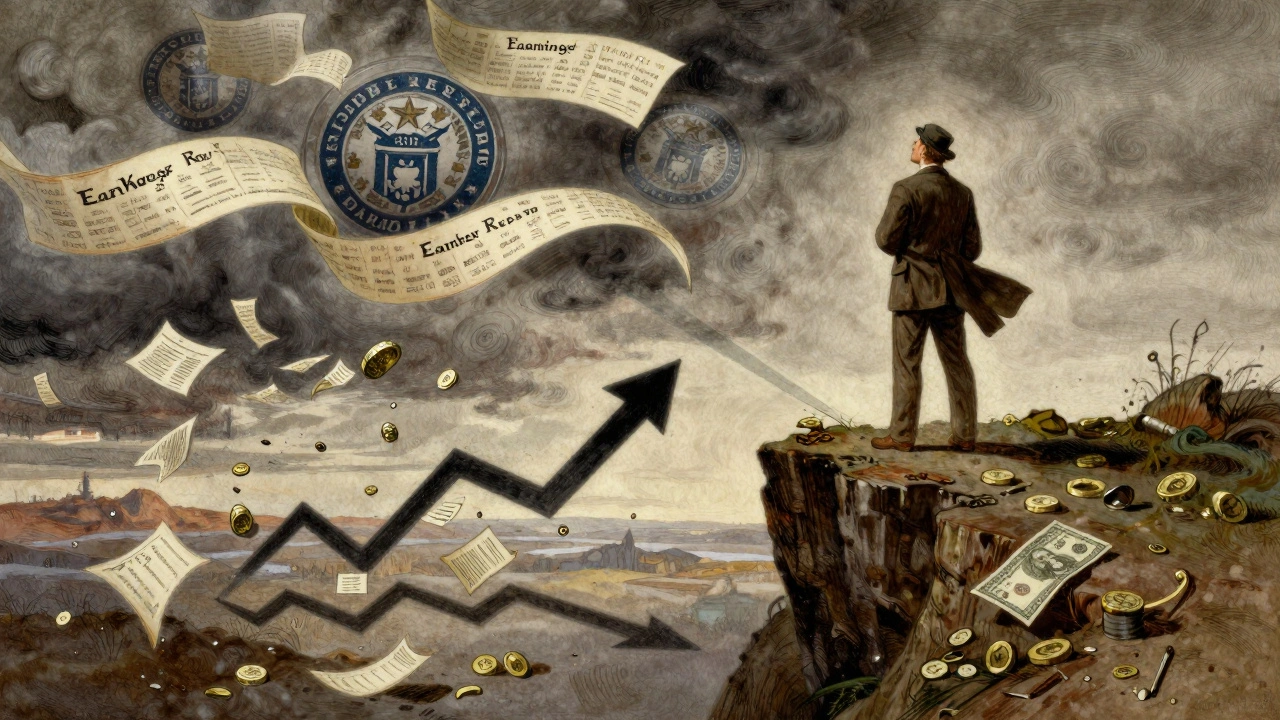
Event-driven rebalancing isn’t about guessing the market. It’s about reacting to clear, measurable events that have a proven history of moving prices. Unlike traditional methods that wait for a portfolio to drift 5% or 10% from its target, this approach waits for something concrete to happen: a Federal Reserve rate decision that exceeds 25 basis points, an S&P 500 company reporting earnings that beat or miss by more than 15%, or a regulatory shift like the SEC’s 2023 climate disclosure rules. These aren’t random triggers. They’re based on decades of market behavior. For example, when the Fed hikes rates by more than 25 bps, bond prices typically drop, growth stocks get hit harder than value stocks, and cash becomes more attractive. If your portfolio is overweight in long-duration bonds or tech stocks, that’s a signal-not a suggestion-to adjust. The data backs this up. During the 2022-2023 rate hiking cycle, portfolios using event-driven rebalancing generated 1.8 times higher risk-adjusted returns than standard 60/40 portfolios. They also saw 23% lower volatility during the 2023 banking crisis. That’s not luck. It’s precision.How It Works: The Three Key Events
There are three main types of events that trigger rebalancing, each with its own data source and logic:- Monetary policy events: Fed rate decisions that exceed 25 basis points. Not every announcement matters-only those that change the trajectory. Institutional systems track Fed Funds futures to assign probability weights. If the market is pricing in a 70% chance of a hike and the Fed delivers, that’s a trigger. If they hold rates despite a 90% expectation? That’s an even bigger signal.
- Earnings surprises: When a company reports earnings that deviate by more than 15% from analyst estimates. A 20% beat in Apple’s revenue? That might mean shifting more into tech. A 22% miss from a semiconductor firm? That could mean trimming exposure before the rest of the sector crashes. Tejwin’s case study in March 2025 showed a portfolio reducing semiconductor holdings 48 hours before a major earnings miss, avoiding a 15% sector-wide plunge.
- Regulatory policy shifts: New rules from the SEC, Treasury, or other agencies that affect entire industries. The 2023 climate disclosure rules forced energy and manufacturing firms to rethink their capital plans. Portfolios that moved ahead of compliance deadlines outperformed those that waited.
Why It Outperforms Traditional Rebalancing
Traditional rebalancing is like changing your oil every 3,000 miles-even if you haven’t driven. Event-driven rebalancing is like changing it when the engine starts overheating. During the 2022-2024 period, event-driven strategies delivered 3.2% annualized excess returns over time-based rebalancing. The biggest gains came during policy pivots. In Q4 2023, when the Fed paused rate hikes, portfolios that reduced duration exposure ahead of the announcement saw a 5.7% outperformance. It also handles volatility better. When the yield curve inverted in 2023, event-driven portfolios managed correlation risks 31% better than risk-parity models. They didn’t just reduce exposure-they repositioned with intent. But it’s not magic. In calm markets, it underperforms. During Q2 2024, when only three meaningful events occurred, event-driven strategies lagged by 0.9%. That’s because trading costs add up. Each event-triggered trade costs 0.28% on average, compared to 0.12% for scheduled rebalancing. If you’re reacting to noise, you’re paying for nothing.
The Hidden Costs and Risks
Event-driven rebalancing sounds powerful-but it’s not for everyone. The biggest risk? False triggers. In March 2023, during the banking crisis, 18% of planned rebalancing events turned out to be counterproductive. Why? Because markets overreacted. A minor Fed speech about inflation was misinterpreted as a rate hike signal. Retail platforms triggered Treasury reallocations. Within days, the Fed clarified its stance. Investors who acted lost 0.6% in trading fees and missed the rebound. Retail investors often fall into the trap of “event overload.” In Q1 2025, one platform flagged 147 potential events. Only 19 had real market impact. That’s noise. And noise kills returns. Another issue: latency. Institutional systems react in milliseconds. Retail investors using apps like Betterment or Schwab often face 2-3 hour delays. By the time the alert pops up, the move has already happened-and the price has moved against you. Then there’s the human factor. Dr. Robert Shiller’s 2023 study found 72% of retail investors overestimate the predictive power of earnings reports. They see a big beat and rush in. They see a miss and panic-sell. Event-driven rebalancing works only if you stick to the rules-even when your gut screams otherwise.Who Should Use It-and Who Shouldn’t
This isn’t a one-size-fits-all strategy. Best for:- Institutional investors with access to real-time data feeds (Bloomberg, FactSet)
- Portfolios over $5 million with dedicated risk teams
- Investors in volatile markets-like those facing frequent Fed shifts or regulatory uncertainty
- Retirees with simple, low-turnover portfolios
- Those who can’t afford 0.28% per trade in fees
- People who don’t have the time to understand Fed dot plots or earnings surprise ranges by sector
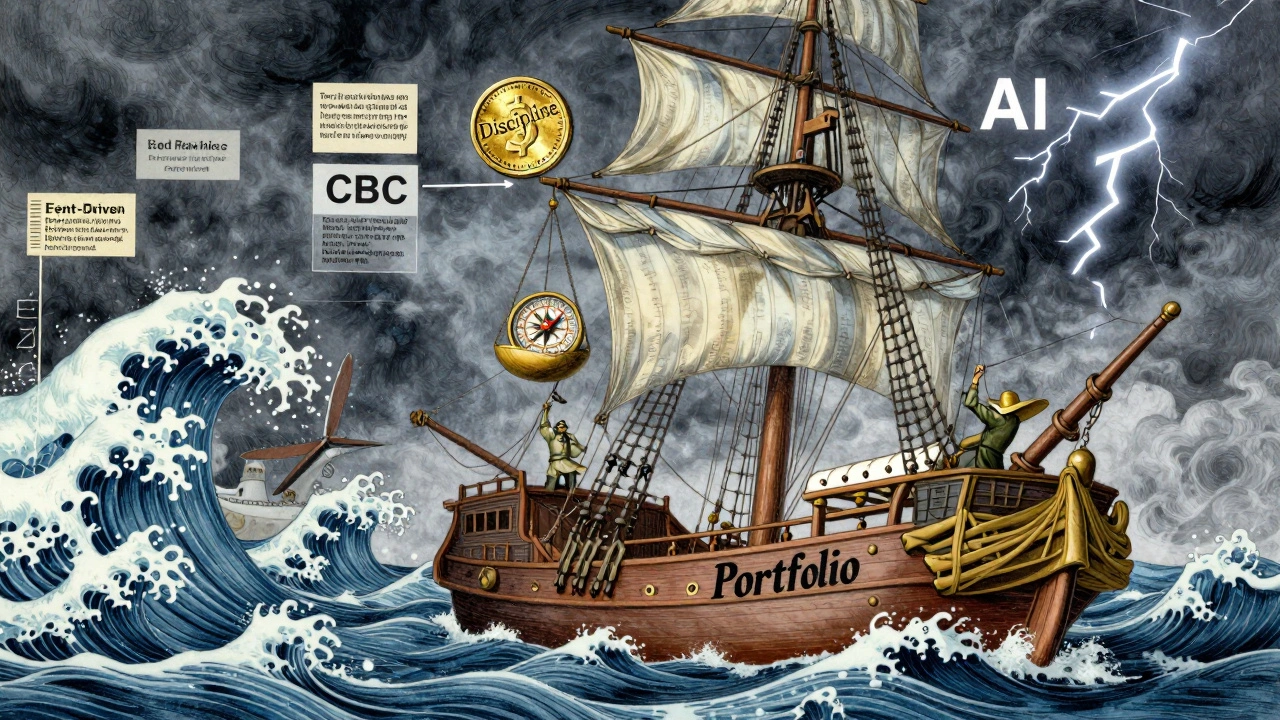
How to Get Started (Even If You’re Not an Institution)
You don’t need a $100 million portfolio to use event-driven principles. Here’s how to adapt them:- Define your triggers. Pick one or two events max. Start with Fed rate hikes >25 bps and S&P 500 earnings surprises >15%. Ignore everything else.
- Set thresholds. Don’t rebalance on every hike. Only act if the hike changes the Fed’s projected path (check the dot plot). If they hike once but say they’re done, hold.
- Use confirmation filters. Wait for two sources to agree. If the Fed hikes and the 10-year yield jumps 15 bps within an hour, that’s a signal. If only one moves, wait.
- Execute in stages. Don’t flip your entire allocation at once. Move 30% immediately. Wait 48 hours. If the trend holds, add the rest.
- Track your results. Keep a log. Did the trade help? Did it cost more than it gained? Adjust your rules every quarter.






Comments
Mark Vale
December 15, 2025sooo... uhm... the fed’s been lying since 2020 and this whole ‘event-driven’ thing is just a fancy way for wall street to dump trash on retail while pretending it’s science? i mean, if you read the dot plot like it’s a horoscope and then trade on it… you’re basically letting aladdin (the blackrock ai) play chess with your retirement while you watch netflix. and don’t get me started on how they ‘predict’ hikes using futures-those are just bets, not facts. they made 147 ‘events’ in q1 2025? lol. that’s not data, that’s a spam bot with a phd. i’m keeping my cash under the mattress. at least it doesn’t charge 0.28% to do nothing.
Royce Demolition
December 17, 2025YESSSS THIS IS THE FUTURE 🚀🔥
Who cares about quarterly rebalancing when you can react like a ninja to Fed moves and earnings bombs?! 💥
I started using Betterment’s Market Pulse last month and my portfolio just did a backflip 🤸♂️📈
When Apple dropped that 20% beat? I moved 30% into tech before lunch. 48hrs later? Added the rest. Profit? 🤑
Yes, fees suck-but think of it as a gym membership for your money. You don’t skip leg day just because it hurts. You DO THE WORK. 🏋️♂️💪
And if you’re scared of noise? DUMB. The market’s loud. Get earplugs or get left behind. #EventDrivenLife #NoMorePassiveInvesting
Sabrina de Freitas Rosa
December 18, 2025Oh honey. You think you’re so smart with your ‘event triggers’ and your ‘confirmation filters’? 🙄
You’re just a pawn in a game where the house always wins. That ‘1.8x higher returns’? Yeah, that’s from 2022-2023 when EVERYTHING was falling. Of course rebalancing looked good-because the market was on fire and you just ran away from the flames.
And don’t even get me started on ‘retail investors overestimating earnings.’ DUH. You think people are stupid? No. You think they’re lazy. And you’re selling them snake oil wrapped in a Bloomberg terminal.
My grandma’s 60/40 portfolio made more last year than your fancy AI. She doesn’t even know what a ‘dot plot’ is. She just buys Coca-Cola and laughs. And guess what? She’s still laughing. You? You’re just paying fees to feel important.
Write a comment